Just finished a fantastic week at the Writing and Illustrating for Young Readers conference. Fantastic event with several national agents and a national editor, too. I participated in an intensive writer's workshop with the fabulous author, J. Scott Savage, author of the Farworld series, as well as Case File 13: Zombie Kids.
Eleven of us submitted 20 pages for group and professional critique, then got dazzled as Scott showed us how to analyze our work not just for craft, but also for for audience response. Since we were a middle grade session, this was particularly helpful for my WIP, a new MG sci-fi urban fantasy. The conference was tremendous in rehabilitating my enthusiasm for writing and for exponentially increasing my skills. how's that for a plug?!
Ultimately, I was reminded of how I need to finish constructing the story, the character arcs, and plotting, before I continue. So I'm using a number of methods, but wanted to clue you in to one great method: Dan Wells' Seven-Point System for plotting. He gave the presentation at LTUE in February 2010. You can watch it on YouTube here, or read a great summary first by Lisa Bouchard. It's one of several methods I use, and a good one.
Happy writing!
Showing posts with label Writing Advice. Show all posts
Showing posts with label Writing Advice. Show all posts
Monday, June 24, 2013


Tuesday, June 21, 2011
Story Structure, Character Structure
 The past two weeks I've taken off from writing and planning book two in the Lizzie Peterson saga. In part that's because I just needed a break from editing, in part because I was deep into writing several articles for my day job as a writer and editor, and in part because I'm doing some serious research into story structure. Oh, and into publishing, but that's a different post.
I've been studying Larry Brooks' book, Story Engineering: Mastering the 6 Core Competencies of Successful Writing. You can see the cover to the right.
Larry has some very inventive ideas about what makes up a story, character, theme, conflict, concept, and structure. It's got me thinking and rethinking and thinking some more. That's the danger with doing too much research into how to craft stories! ;-)
So, combine this with Dan Wells' presentation at BYU's LTUE symposium two years ago, and you have two very nice approaches to the craft of story. Add Katherine Farmer's research on characters (no direct link to her, but a summary at my friend, Matt Tandy's blog), and you have several key concepts to consider when writing.
What I like about Larry's book, especially when I incorporate my own ideas and others' on story, is that it has the potential to make writing much, much more efficient, powerful, and engaging on all levels.
I'm naturally gifted at plot and dialogue, but I struggle a bit with character (except strong female characters, interestingly enough) and theme.
Now, I'm beginning to see how to see, delve into, and craft an entire world story before I even begin to type it. It's a fascinating journey.
So, if you are interested in really improving your craft, I recommend studying (not reading) Larry's book, watching Dan's presentation a few times, and finding someone who can share with you Katherine's methods (I don't want to give too much because she's writing a book on it and that might preempt her. But if you want to get together sometime, I can teach you what I know.)
What you need to understand is that story is structure, as Tracy Hickman and so many have told me. I've blundered my way through enough free writing and enough outlines to story that still lacked something that I've realized there is a deep, compelling need for a story to work on multiple levels.
The master writer, the truly gifted writer, I believe, is gifted not because she just intrinsically knows all this, but because she learns the craft so deeply that she can apply it and exercise it and manipulate it in the creation of the story. And that means fewer revisions, better stories that people want to read, and greater success as a writer.
That's a fantastic goal.
Monday, June 6, 2011
Achieving Balance in Your Life and Writing
Hi Folks,
This is going to be a short post today. That fits quite nicely with the topic on achieving balance in your life and writing.
As writers, we tend to work in a fairly solitary environment. I've seen countless posts about this--regarding the strengths of going to writing workshops, seminars, signings, etc., so that you get out there and meet fans and friends and network. It's all true--and fantastically so.
I've also read scads of pieces on how to make sure you actually produce--methods for writing, setting goals, making sure you make your writing time sacrosanct so that you can produce and feel good about it, and so on. Great advice, too.
And then there are the questions about, "How do I do it all? How do I find time to write while still doing all the things I have to do?" Also a great question.
But I want to talk for just a moment about the opposite: How do I find time for my life when I'm writing/editing/networking?
Sometimes you have to really cram in the work. There is just no way around it. I spent 8 hours editing on Saturday--a day I had planned on spending with my kids. I had spent almost all my time off the day job busy with some duty or on writing. But there was a request, and a need to get it out, and so the sacrifice was made.
But now I'm finding there's a need for just a bit of a break. My family needs me. My yard needs me. My brain needs a break. I have some books I need to read. Etc., etc.
The reality is, I'm still fortunate right now in that I can take some time off. This week, I'm going to see Thor with a friend, I'm going to take my son to see Kung Fu Panda 2, and I'm going to just relax.
Yes, I'll probably also read some on plot structure and map out some of book 2. But only if the itch sends me there.
Sometimes you just have to take a break. And that's ok, too.
[Look forward to Fantastic Author Friday: This week I'm interviewing Lisa Mangum, author of the Hourglass Door Trilogy]
This is going to be a short post today. That fits quite nicely with the topic on achieving balance in your life and writing.
As writers, we tend to work in a fairly solitary environment. I've seen countless posts about this--regarding the strengths of going to writing workshops, seminars, signings, etc., so that you get out there and meet fans and friends and network. It's all true--and fantastically so.
I've also read scads of pieces on how to make sure you actually produce--methods for writing, setting goals, making sure you make your writing time sacrosanct so that you can produce and feel good about it, and so on. Great advice, too.
And then there are the questions about, "How do I do it all? How do I find time to write while still doing all the things I have to do?" Also a great question.
But I want to talk for just a moment about the opposite: How do I find time for my life when I'm writing/editing/networking?
Sometimes you have to really cram in the work. There is just no way around it. I spent 8 hours editing on Saturday--a day I had planned on spending with my kids. I had spent almost all my time off the day job busy with some duty or on writing. But there was a request, and a need to get it out, and so the sacrifice was made.
But now I'm finding there's a need for just a bit of a break. My family needs me. My yard needs me. My brain needs a break. I have some books I need to read. Etc., etc.
The reality is, I'm still fortunate right now in that I can take some time off. This week, I'm going to see Thor with a friend, I'm going to take my son to see Kung Fu Panda 2, and I'm going to just relax.
Yes, I'll probably also read some on plot structure and map out some of book 2. But only if the itch sends me there.
Sometimes you just have to take a break. And that's ok, too.
[Look forward to Fantastic Author Friday: This week I'm interviewing Lisa Mangum, author of the Hourglass Door Trilogy]
Monday, May 30, 2011
Character Thoughts
I attended CONduit this weekend, a small but lively little SF&F convention held annually in Salt Lake city. In addition to seeing many good friends and making some new ones, I had the opportunity to attend some excellent sessions on writing.
One in particular stands out. Tracy Hickman discussed the craft of story, and mentioned again that our stories don't exist until someone reads them. We don't write to be published, but to be read.
I love that advice. It changes the entire landscape of what we are trying to accomplish and how we go about our business. It's not just about the numbers game, but about the craft and about sharing our stories in a meaningful way.
I believe it was also Tracy who talked about the important role of character. As you know from some of my previous posts on character, I've really been placing a lot of my recent writing education on character and why it's to important to story.
Well, Tray mentioned that we may not remember the plot or stories years later that we've read, but a really good character will stay with us.
That has proven entirely true in my case. I can remember characters from stories I read 25 years ago much better than the actual plot. In fact, I recently reread a book and had completely convoluted the plot in my mind, but the character stayed with me and was basically accurate.
Why is that? And why in some stories does the character just disappear?
I think this question involves that characters are put in situations that really cause them to think and challenge themselves. But it's more than that.
It's characters that have been well thought out and described and come to life. But it's more than that.
It's characters that have flaws they have to work through or deal with. But it's more than that, too.
Why do some characters have a greater impact than others? I think it's a combo of all those things: plot, setting, situation, conflict, and resolution that both speak to us and challenge our own way of thinking, and done so in a way that we both want to be like the characters and don't want to be like them.
And that is a quest we all must figure out, each time we write.
One in particular stands out. Tracy Hickman discussed the craft of story, and mentioned again that our stories don't exist until someone reads them. We don't write to be published, but to be read.
I love that advice. It changes the entire landscape of what we are trying to accomplish and how we go about our business. It's not just about the numbers game, but about the craft and about sharing our stories in a meaningful way.
I believe it was also Tracy who talked about the important role of character. As you know from some of my previous posts on character, I've really been placing a lot of my recent writing education on character and why it's to important to story.
Well, Tray mentioned that we may not remember the plot or stories years later that we've read, but a really good character will stay with us.
That has proven entirely true in my case. I can remember characters from stories I read 25 years ago much better than the actual plot. In fact, I recently reread a book and had completely convoluted the plot in my mind, but the character stayed with me and was basically accurate.
Why is that? And why in some stories does the character just disappear?
I think this question involves that characters are put in situations that really cause them to think and challenge themselves. But it's more than that.
It's characters that have been well thought out and described and come to life. But it's more than that.
It's characters that have flaws they have to work through or deal with. But it's more than that, too.
Why do some characters have a greater impact than others? I think it's a combo of all those things: plot, setting, situation, conflict, and resolution that both speak to us and challenge our own way of thinking, and done so in a way that we both want to be like the characters and don't want to be like them.
And that is a quest we all must figure out, each time we write.
Monday, May 23, 2011
Interview with Deirdra Eden Coppel
I was interviewed by Deirdra Eden Coppel, another talented writer! Very cool. If you're interested, you can check out the interview entitled "Interview with Author and Senior Editor, Joshua J. Perkey."
Let me know what you think.
I'll have a follow up interview featuring Deirdra sometime soon. If you are interested in an author interview on my blog, let me know and we can chat!
Let me know what you think.
I'll have a follow up interview featuring Deirdra sometime soon. If you are interested in an author interview on my blog, let me know and we can chat!
Saturday, May 14, 2011
Writing Advice: John Brown on Key Conditions for Suspense
Here's a fantastic essay on the Key Conditions for Suspense, by author John Brown. John is an amazing writer, extremely talented in the craft of story telling and in teaching others how to build stories. I may link to him more often--he's got great things to offer.
 If you want to read the posts from the beginning, read part 1 at the Key Conditions for Reader Suspense hosted by SFWA.
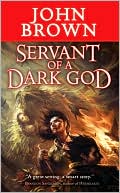
John's first epic fantasy novel, Servant of a Dark God, is also available, and the sequel should be available soon.
 If you want to read the posts from the beginning, read part 1 at the Key Conditions for Reader Suspense hosted by SFWA.
John's first epic fantasy novel, Servant of a Dark God, is also available, and the sequel should be available soon.
Saturday, May 7, 2011
LDS Storymakers conference
Sorry I have been incognito this week, folks. I've been preparing for my presentation at the LDS Storymakers conference yesterday and today. This has been the best conference I have attended, bar none. It's got me rethinking my entire launch strategy. I'll blog about this extensively next week.
I met a number of agents, talented writers, and reconnected with great editors and friends. National agents Becca Stumpf, Sara Crowe, and Sara Megibow have all been charming. Great classes on marketing and the craft of writing.
And my own presentation on writing for the Church and national magazines went quite well.
If you're in the Salt Lake City area and you are a writer, do yourself a favor and come on down today. You won't be disappointed.
I met a number of agents, talented writers, and reconnected with great editors and friends. National agents Becca Stumpf, Sara Crowe, and Sara Megibow have all been charming. Great classes on marketing and the craft of writing.
And my own presentation on writing for the Church and national magazines went quite well.
If you're in the Salt Lake City area and you are a writer, do yourself a favor and come on down today. You won't be disappointed.
Friday, April 29, 2011
Writing Advice: Action and Pacing
My friend David Powers King wrote a nice little blog on action and pacing. Essentially, in action sequences you have to work hard to keep the scene moving while still giving enough of the story that people feel engaged and not bored.
I'd add to this that you have to carefully select the details you want to include. I read a story by a friend once that felt very much like a video game sequence. Excessive detail and blow-by-blow description of each and every minuscule movement about killed me--the reader. I don't think he was going for that! I felt like I was inside a really poorly scripted game that just wouldn't move beyond cliche phrasing and tedious description.
On the other hand, if you don't have enough description, you can cause several other adverse reactions: Readers may have a hard time understanding what's going, as they did during a sequence in my current middle grade fantasy, Lizzie Peterson and the Places of Naming, when the main character uses magic to create an ice raft out of part of a river. It was a hard sequence because she was being attacked at the same time, and the river kept pulling the raft downstream. And she's in a cave. And there are three other supporting characters, too.
So I had to rewrite the scene about 10 times trying to balance enough description that you as the reader could really see what was happening but also keep the sense of peril high. Very tricky. In fact, it was the hardest scene to write in the entire book. I hope it works!
So don't be afraid to write a scene quickly to just get the idea out there. Then read it a day or two later and ask yourself if it makes any sense, if the pacing is still quick and sharp, if it is exciting to you as a reader (not as an author). Then get as many people to read it as you can stand. They'll be honest on all accounts, especially if it's not working.
Action and description and tense moments. Definitely a fine balance.
I'd add to this that you have to carefully select the details you want to include. I read a story by a friend once that felt very much like a video game sequence. Excessive detail and blow-by-blow description of each and every minuscule movement about killed me--the reader. I don't think he was going for that! I felt like I was inside a really poorly scripted game that just wouldn't move beyond cliche phrasing and tedious description.
On the other hand, if you don't have enough description, you can cause several other adverse reactions: Readers may have a hard time understanding what's going, as they did during a sequence in my current middle grade fantasy, Lizzie Peterson and the Places of Naming, when the main character uses magic to create an ice raft out of part of a river. It was a hard sequence because she was being attacked at the same time, and the river kept pulling the raft downstream. And she's in a cave. And there are three other supporting characters, too.
So I had to rewrite the scene about 10 times trying to balance enough description that you as the reader could really see what was happening but also keep the sense of peril high. Very tricky. In fact, it was the hardest scene to write in the entire book. I hope it works!
So don't be afraid to write a scene quickly to just get the idea out there. Then read it a day or two later and ask yourself if it makes any sense, if the pacing is still quick and sharp, if it is exciting to you as a reader (not as an author). Then get as many people to read it as you can stand. They'll be honest on all accounts, especially if it's not working.
Action and description and tense moments. Definitely a fine balance.
Thursday, March 31, 2011
Preparing for Literary Conference Thoughts Take 2: the Pitch Is Everything
A couple of more quick thoughts on this topic before we call it close tonight. There are tons, I mean TONS, of resources out there on getting ready for a conference. Authors Incognito had a couple of great posts on pitches and queries. For example, Danyelle Ferguson talked about "The Essentials on How to Prepare for a Pitch Session," and Jenn Johansson talked about "The Perfect Elevator Pitch." By the way, great photos, ladies!
Here's another great resource: Kristin Nelson, literary agent, has a great blog worth following. Go to her blog and search for "pitch" or "query." You'll find sample pitch letters and a query workshop with 11 entries, as well as a lot of detail on agents.
I suggest looking at blogs by agents you like, or by agents your friends like, and see what they have to offer about this. Many of them, like Kristin, have samples or suggestions.
I just Googled "elevator pitch" and got over a million hits. Yeah--way too many to wade through in one setting, but you'll find plenty of good things out there.
I think more than anything, you want to have something simple and concrete to talk about regarding your book or project. If I could only give one piece of advice, it would be to hone over and over your pitch until you have it concrete, simple, and engaging. Have the 6 word version, the 25 word version, and the 100 word version. And know them by heart. But always bring them with you--written down. If you know what your story is about, then you know what you want to do at the conference and who you want to meet.
But don't worry if you don't have something worth pitching. Find your genre and talk about that with people.
And don't eat too much. This may sound silly, but bring a toothbrush and some dental floss. The last thing you want is to feel embarrassed or simply uncomfortable because of something you ate. You can always sneak off to the restroom to assess the situation. But you can't take the discomfort back if you later find you've had spinach in your teeth all day!
Here's another great resource: Kristin Nelson, literary agent, has a great blog worth following. Go to her blog and search for "pitch" or "query." You'll find sample pitch letters and a query workshop with 11 entries, as well as a lot of detail on agents.
I suggest looking at blogs by agents you like, or by agents your friends like, and see what they have to offer about this. Many of them, like Kristin, have samples or suggestions.
I just Googled "elevator pitch" and got over a million hits. Yeah--way too many to wade through in one setting, but you'll find plenty of good things out there.
I think more than anything, you want to have something simple and concrete to talk about regarding your book or project. If I could only give one piece of advice, it would be to hone over and over your pitch until you have it concrete, simple, and engaging. Have the 6 word version, the 25 word version, and the 100 word version. And know them by heart. But always bring them with you--written down. If you know what your story is about, then you know what you want to do at the conference and who you want to meet.
But don't worry if you don't have something worth pitching. Find your genre and talk about that with people.
And don't eat too much. This may sound silly, but bring a toothbrush and some dental floss. The last thing you want is to feel embarrassed or simply uncomfortable because of something you ate. You can always sneak off to the restroom to assess the situation. But you can't take the discomfort back if you later find you've had spinach in your teeth all day!
Monday, March 21, 2011
Character and Arc
I've always had an easy time creating plot. In fact, my stories tend to be plot driven. I understand that's often the way guys think--especially guys who write SF&F.
For me, it's a natural outgrowth of daydreaming, of simply imagining fun, fantastic, dangerous, supernatural things that take place and being a part of it.
Like many writers, I often imagine myself in the middle of my own stories. It's part of what makes the creative outlet so enjoyable. I get to be there doing those amazing things with magic, swords, dragons, you name it. And it's a lot of fun.
But plot is only part of what makes a story work. Ultimately, stories are about people. I've read this a gazillion times. Everyone has something to say about how character must drive story, about how it's their struggle that ultimately is what makes a story good.
That's not the most intrinsically easy thing for me to understand. But I think I've finally begun to understand this process a little better--for two reasons:
1. Characters are what make a story, deep down, interesting to readers. They of course love the action and imagery and movement of plot and setting. But within they have to relate to the characters, be able to see themselves in the role or near the role somehow. That's why even the bad guys have to have good qualities, and why the good guys, if they are too good and perfect, don't engage readers the way they need to. It's something about us doing things and being part of things that speaks to us on a deeper level.
Thus, the character drives the story. That's because a character with no real emotion, with no arc, no sense of becoming something different or more or evolving in some way, seeing the world differently by the end, or gaining hidden strength, or some such, that's part of the human process. Our lives are mundane and boring if nothing ever changes. And stories where the character is cookie cutter, exactly the same person in all reasonable senses, in terms of how they think, act, or do on all levels, from page one to the end, feels just like that: a non character. Our lives may get mundane, but usually things happen that cause us to answer deep questions about what we believe and feel or do--and not too infrequently, really.
2. I want to enjoy the story, so I don't have to decide from the beginning: the character must change, therefore make it happen. Rather, I think about what their motivations are and what causes those motivations to be in jeopardy. Then I think about what kind of message their responses will send. Some have taught that their responses will flow naturally from the situation. But I find that only partially true. Most of us are complicated enough that Sherlock Holmes would fail--that we are not always predictable in how we respond to life. Thus, I have to weigh how the characters respond because that will ultimately mean something, as well as determine the flow, weight, feeling, tone, and result of the novel.
Thus, character for me is becoming deeply important, even essential, to the make up of the story. And that's both refreshing and a bit scary. I still love to just daydream and see what happens!
For me, it's a natural outgrowth of daydreaming, of simply imagining fun, fantastic, dangerous, supernatural things that take place and being a part of it.
Like many writers, I often imagine myself in the middle of my own stories. It's part of what makes the creative outlet so enjoyable. I get to be there doing those amazing things with magic, swords, dragons, you name it. And it's a lot of fun.
But plot is only part of what makes a story work. Ultimately, stories are about people. I've read this a gazillion times. Everyone has something to say about how character must drive story, about how it's their struggle that ultimately is what makes a story good.
That's not the most intrinsically easy thing for me to understand. But I think I've finally begun to understand this process a little better--for two reasons:
1. Characters are what make a story, deep down, interesting to readers. They of course love the action and imagery and movement of plot and setting. But within they have to relate to the characters, be able to see themselves in the role or near the role somehow. That's why even the bad guys have to have good qualities, and why the good guys, if they are too good and perfect, don't engage readers the way they need to. It's something about us doing things and being part of things that speaks to us on a deeper level.
Thus, the character drives the story. That's because a character with no real emotion, with no arc, no sense of becoming something different or more or evolving in some way, seeing the world differently by the end, or gaining hidden strength, or some such, that's part of the human process. Our lives are mundane and boring if nothing ever changes. And stories where the character is cookie cutter, exactly the same person in all reasonable senses, in terms of how they think, act, or do on all levels, from page one to the end, feels just like that: a non character. Our lives may get mundane, but usually things happen that cause us to answer deep questions about what we believe and feel or do--and not too infrequently, really.
2. I want to enjoy the story, so I don't have to decide from the beginning: the character must change, therefore make it happen. Rather, I think about what their motivations are and what causes those motivations to be in jeopardy. Then I think about what kind of message their responses will send. Some have taught that their responses will flow naturally from the situation. But I find that only partially true. Most of us are complicated enough that Sherlock Holmes would fail--that we are not always predictable in how we respond to life. Thus, I have to weigh how the characters respond because that will ultimately mean something, as well as determine the flow, weight, feeling, tone, and result of the novel.
Thus, character for me is becoming deeply important, even essential, to the make up of the story. And that's both refreshing and a bit scary. I still love to just daydream and see what happens!
Subscribe to:
Posts (Atom)